untitled
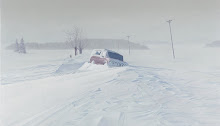
Black willow rivers steal a kiss of snow
Through a cold-bone thicket, ice upon treetrunk
No footprints whatsoever,
Not even my own.
Valleys thieve all sense of direction
Where no shadow falls to call a compass;
"You're not meant to know where you're supposed to be
Only where you are."
Sunday, October 4, 2009
untitled
Our feet search the ground
Cautiously, like new lovers
And we find our way through a canopy
Of red and white pine.
A coral reef of green is swaying like a storyteller
Drunk in the ocean of his breath.
The sun creeps away with a lazy brushstroke;
An intoxicated violet upon
The canvas of a dying madman
Is stretched across the sky.
We wander almost aimlessly underneath
Trying to get lost.
Our feet search the ground
Cautiously, like new lovers
And we find our way through a canopy
Of red and white pine.
A coral reef of green is swaying like a storyteller
Drunk in the ocean of his breath.
The sun creeps away with a lazy brushstroke;
An intoxicated violet upon
The canvas of a dying madman
Is stretched across the sky.
We wander almost aimlessly underneath
Trying to get lost.
Wednesday, August 19, 2009
my WEBSITE is up!:
http://www.davidcaesar.com/
and all the others...
http://www.facebook.com/pages/David-Caesar-Art/79690578137?ref=ts
http://www.flickr.com/photos/38503591@N06/
http://www.behance.net/davidcaesar
http://profile.myspace.com/index.cfm?fuseaction=user.viewprofile&friendid=503353705
http://dcaesar.blogspot.com/
http://networkedblogs.com/p11582490
http://www.davidcaesar.com/
and all the others...
http://www.facebook.com/pages/David-Caesar-Art/79690578137?ref=ts
http://www.flickr.com/photos/38503591@N06/
http://www.behance.net/davidcaesar
http://profile.myspace.com/index.cfm?fuseaction=user.viewprofile&friendid=503353705
http://dcaesar.blogspot.com/
http://networkedblogs.com/p11582490
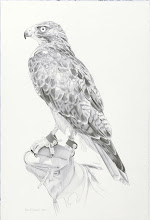
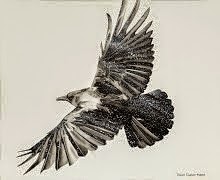
The Heron
So thats the way the heron flies:
Two sticks with feathers on the rise
And then descending from the skies
To bring a sudden, sad demise
To fish and frogs with google-eyes!
Was God not taken by surprise
To see this thing of lullabys
Devour Her other subjects' lives?
Perhaps the bird can't empathize
With creatures smaller than its size.
Two sticks with feathers on the rise,
Thats just the way the heron flies.
Two sticks with feathers on the rise
And then descending from the skies
To bring a sudden, sad demise
To fish and frogs with google-eyes!
Was God not taken by surprise
To see this thing of lullabys
Devour Her other subjects' lives?
Perhaps the bird can't empathize
With creatures smaller than its size.
Two sticks with feathers on the rise,
Thats just the way the heron flies.
untitled
I had a dream the other night
That we were on a mission
To save the world from losing sight
Of a pre-historic vision.
And although the view was scary,
Full of mystery and danger,
It made the world, collectively,
More wonderful and stranger!
We had a master plan and
Studied every calculation
With which to globally replace
Hum-drum with fascination.
We put the pieces into place
Every stratagem compounded.
The Plan began to then unfold -
The world would be astounded!
Press-releases were dispatched;
The governing left and right
Warned the global populace
To watch their world at night!
We then installed two giant lens'
To the walls of a balloon
That lifted us into the air
And magnified the moon!
The people of the world looked up
Their psyches now admonished.
The night was larger in their minds-
The world could now astonish!
What happens next, I'm not so sure
That's where the story finished.
Perhaps we'd dance beneath the stars
The mundane would be diminished.
I don't bring mention of this dream
For no reason whatsoever.
It did convince the dreamer
That our two brains are pretty clever.
I might suggest one summer night
We travel by balloon,
And as we pass the world below
We'll magnify the moon.
-July 27, 2009
That we were on a mission
To save the world from losing sight
Of a pre-historic vision.
And although the view was scary,
Full of mystery and danger,
It made the world, collectively,
More wonderful and stranger!
We had a master plan and
Studied every calculation
With which to globally replace
Hum-drum with fascination.
We put the pieces into place
Every stratagem compounded.
The Plan began to then unfold -
The world would be astounded!
Press-releases were dispatched;
The governing left and right
Warned the global populace
To watch their world at night!
We then installed two giant lens'
To the walls of a balloon
That lifted us into the air
And magnified the moon!
The people of the world looked up
Their psyches now admonished.
The night was larger in their minds-
The world could now astonish!
What happens next, I'm not so sure
That's where the story finished.
Perhaps we'd dance beneath the stars
The mundane would be diminished.
I don't bring mention of this dream
For no reason whatsoever.
It did convince the dreamer
That our two brains are pretty clever.
I might suggest one summer night
We travel by balloon,
And as we pass the world below
We'll magnify the moon.
-July 27, 2009
Sunday, May 17, 2009
The Bridge between Art and Language

"In the beginning was the image. Then came five millennia dominated by the written word. The iconic symbol is now returning."
- Leonard Shlain, "The Alphabet Versus the Goddess
For better or for worse, I've become obssesed with visual connections between images and written languages. Specifically the western "Indo-European" family of alphabets, which includes everything from English to Latin to Ancinet Greek. In comparing images to one another and identifying those that tend to "stick in one's head", I eventually realized that a common ancestor to these images is the written alphabet. There are like characteristics which are undeniable, such as easily-readable silhouettes, profiles, crisp edges and symmetry. Landscape-proportioned images encourage one's eye to move across the picture from left to right, which we do unconsciously - it is simply how we read.
Aside from this alphabet family, there are several other ancient storytelling mediums - using images - that bear the exact same characteristics. Grecian urns or "Kraters" and Egyptian hieroglyphs are excellent examples. Even stained-glass windows offer similarities. This is a powerful triad - story-image-language - manifested in the unconscious dream world, where realistic imagery is carried by the vehicle of the story.
This can be a touch problematic for the image-maker who will have a notably more difficult time evoking stories than the story teller has evoking images. While the bridge connecting imagery to language is concrete, it is a bridge designed for one-way travel.
Nevertheless, it can be safely argued that most art forms are at their strongest when the role of storytelling is undertaken. As Alberto Manguel stated in his indelible "The City of Words", "Language is our common denominator".
- Leonard Shlain, "The Alphabet Versus the Goddess
For better or for worse, I've become obssesed with visual connections between images and written languages. Specifically the western "Indo-European" family of alphabets, which includes everything from English to Latin to Ancinet Greek. In comparing images to one another and identifying those that tend to "stick in one's head", I eventually realized that a common ancestor to these images is the written alphabet. There are like characteristics which are undeniable, such as easily-readable silhouettes, profiles, crisp edges and symmetry. Landscape-proportioned images encourage one's eye to move across the picture from left to right, which we do unconsciously - it is simply how we read.
Aside from this alphabet family, there are several other ancient storytelling mediums - using images - that bear the exact same characteristics. Grecian urns or "Kraters" and Egyptian hieroglyphs are excellent examples. Even stained-glass windows offer similarities. This is a powerful triad - story-image-language - manifested in the unconscious dream world, where realistic imagery is carried by the vehicle of the story.
This can be a touch problematic for the image-maker who will have a notably more difficult time evoking stories than the story teller has evoking images. While the bridge connecting imagery to language is concrete, it is a bridge designed for one-way travel.
Nevertheless, it can be safely argued that most art forms are at their strongest when the role of storytelling is undertaken. As Alberto Manguel stated in his indelible "The City of Words", "Language is our common denominator".
Subscribe to:
Posts (Atom)